

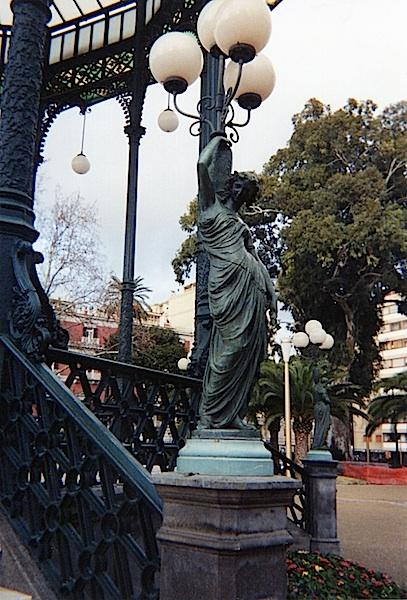
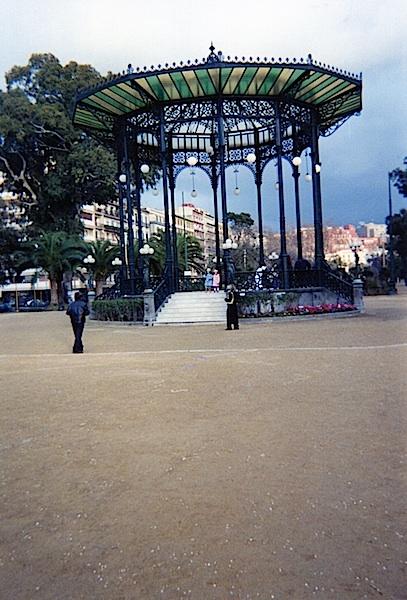
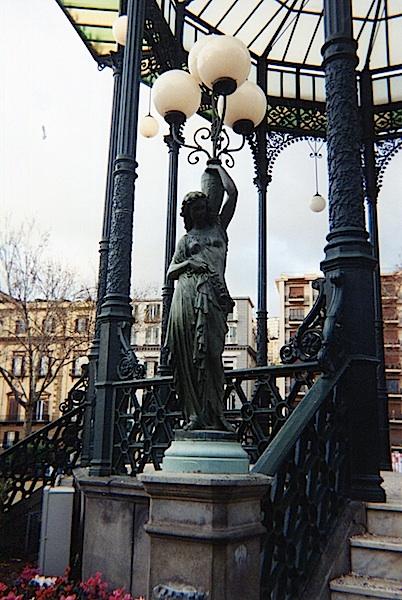
Kiosque – Naples
Monumen
Photo Gallery
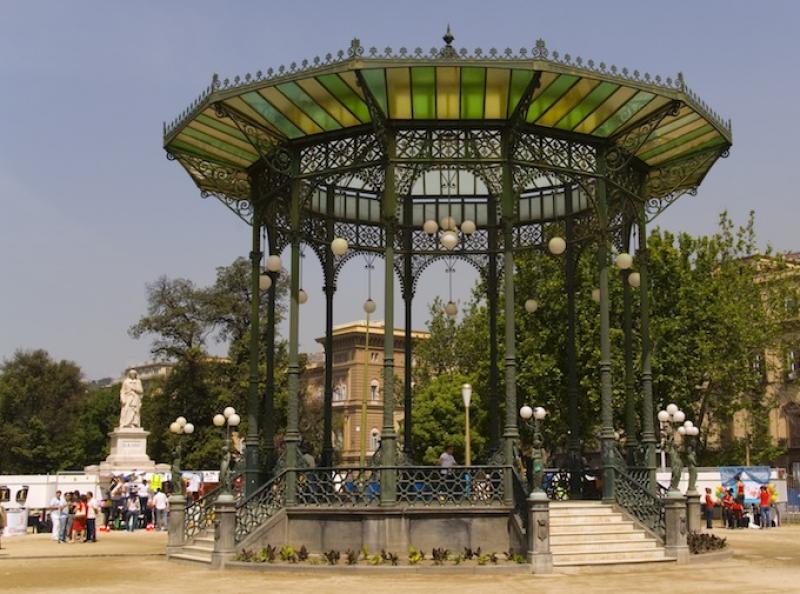
|
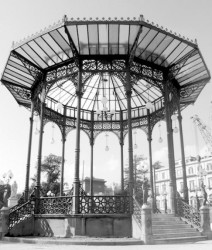
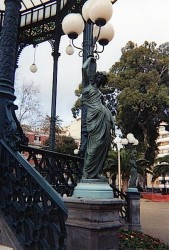
|
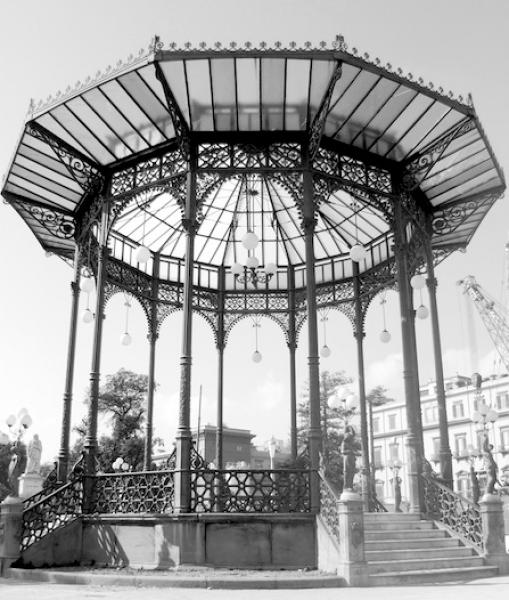
Additional Info
| Sculpteur 1 | MOREAU Mathurin |
| Sculpteur 2 | NON CONNU |
| Sculpteur 3 | NON CONNU |
| Négociant - Distributeur | NON CONNU |
| Technicien | NON CONNU |
| Paysagiste | NON CONNU |
| Fondeur | VAL D'OSNE |
| Architecte | NON CONNU |
| Adresse ou lieu-dit | Villa communale - via Caracciolo Napoli |
| Localité | Naples |
| Pays | Italie |
| Continent | Europe |
| Matériau | Fonte |
| Type d'oeuvre | Décors - balcons - grilles - portes- kiosques |
| Morphologie | mobilier urbain |
| Titulaire(s) et droits sur les photos | Dominique Perchet |
HistoriqueThe Villa Comunale is the most prominent and visible park in Naples, southern Italy. It was built in the 1780s by King Ferdinand IV (later known as Ferdinand I of theTwo Sicilies) on land reclaimed along the coast between the main body of the city and the small port of Mergellina. The park was originally a "Royal Garden", reserved for members of the royal family, but open to the public on special holidays such as the Festival of Piedigrotta. The park was opened to the general public on a permanent basis in 1869 after the unification of Italy. The park houses the Anton Dohrn aquarium, a renowned scientific institution built in the 1870s. The seaside road, via Caracciolo, which now lies between the aquarium and the sea, is another more recent reclamation project added to the city in 1900 to provide another connecting road between the city and the suburbs to the west. (http://en.wikipedia.org/wiki/Villa_Comunale)
La Villa Comunale è il lungo giardino pubblico che separa la Riviera di Chiaia dal lungomare di via Caracciolo, e che dona verde e ombra alla passeggiata nei pressi del mare. La villa si estende tra la piazza della Repubblica e la piazza Vittoria, é attualmente recintata, con varchi di accesso laterali e l'ingresso principale in piazza Vittoria. La sua realizzazione risale al 1780 (ma fu poi ampliata e modificata più volte), per volere del re Ferdinando IV di Borbone che, ispirandosi alle "Tuilieres" parigine, volle per sé e per la nobiltà napoletana un luogo di passeggio, di ritrovo e di tranquillità: era vietato l'accesso al popolo, e i viali alberati vennero abbelliti da statue neoclassiche, tempietti, fontane, e da una splendida cassa armonica in ghisa e vetro. (http://www.danpiz.net/napoli/parchi/VillaComunale.htm) |
Désignation : Kiosque avec des statues « Jeune fille », MM-VO, pl. 580-24 et 25 – VO et kiosque)
Visible : oui
Propriétaire :
Sculpteur : M. Moreau
Fondeur : Val d’Osne
Pour la fiche du kiosque :
Commentaires